The Ultimate Guide to Garden Storage Boxes: 100 Expert Tips for Buying, Organizing, and Maintaining Your Outdoor Storage
[social-share]
Are your garden cushions permanently damp? Is your patio cluttered with scattered tools? Or perhaps you’re tired of dragging mildewed pool toys from a leaking storage box every summer? You’re not alone.
Choosing and maintaining the correct garden storage box can transform your outdoor space from chaotic to magazine-worthy—but most homeowners make critical mistakes that cost them time, money, and storage frustration.
Whether you’re storing delicate patio cushions, heavy garden tools, or children’s outdoor toys, this comprehensive guide will walk you through everything you need to know.
We’ve compiled 100 expert-vetted tips across six essential phases: from selecting the perfect material to creative repurposing hacks that maximize every square inch of your garden.
In this guide, you’ll discover:
- How to choose between wood, resin, and metal storage (and which one actually lasts longest)
- The #1 mistake that ruins 90% of stored cushions (hint: it’s not rain)
- Space-saving organization hacks used by professional landscapers
- Maintenance schedules that extend your box’s lifespan by years
- Security tips to protect expensive equipment from theft
Phase 1: Buying & Selection Strategy (Tips 1-20)
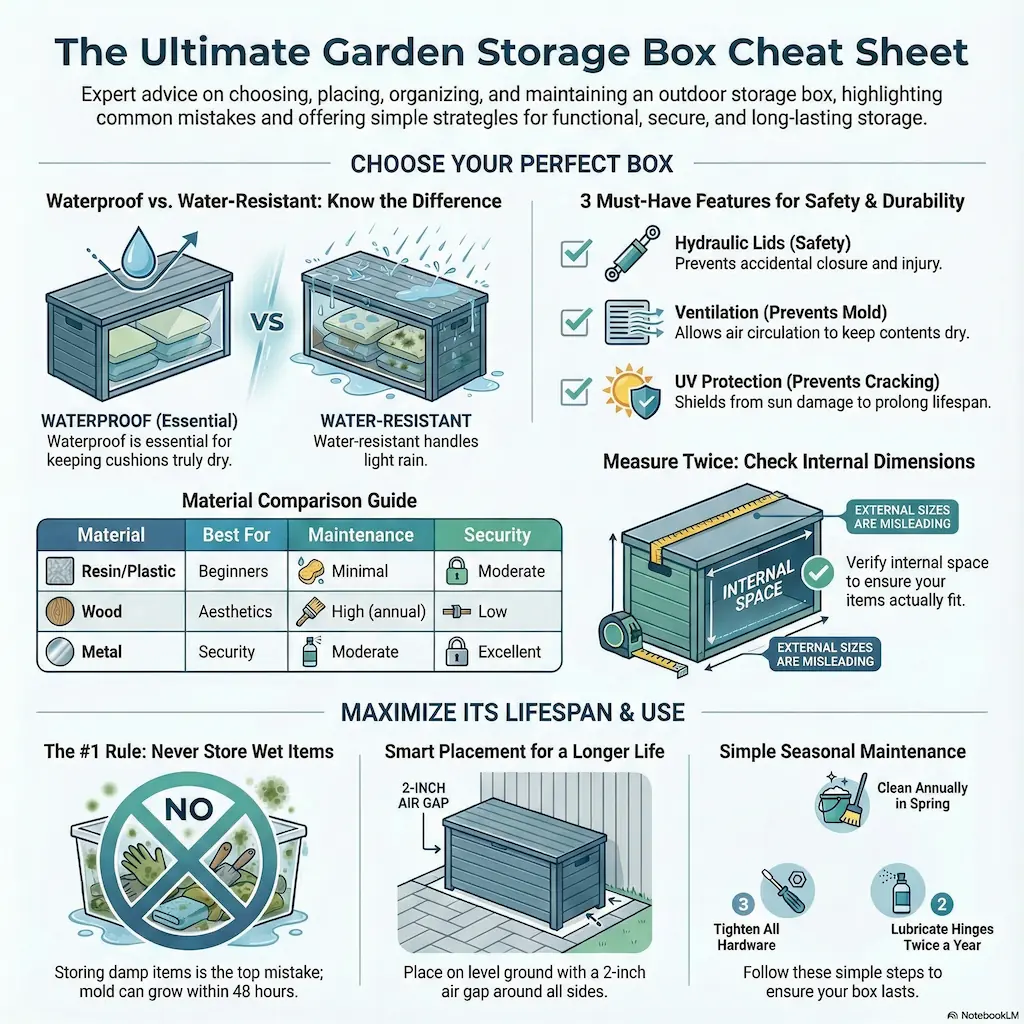
The foundation of outdoor storage success starts with choosing the correct box. According to Garden Buildings Direct, understanding material properties can extend your storage’s lifespan by up to 10 years.
Understanding Materials
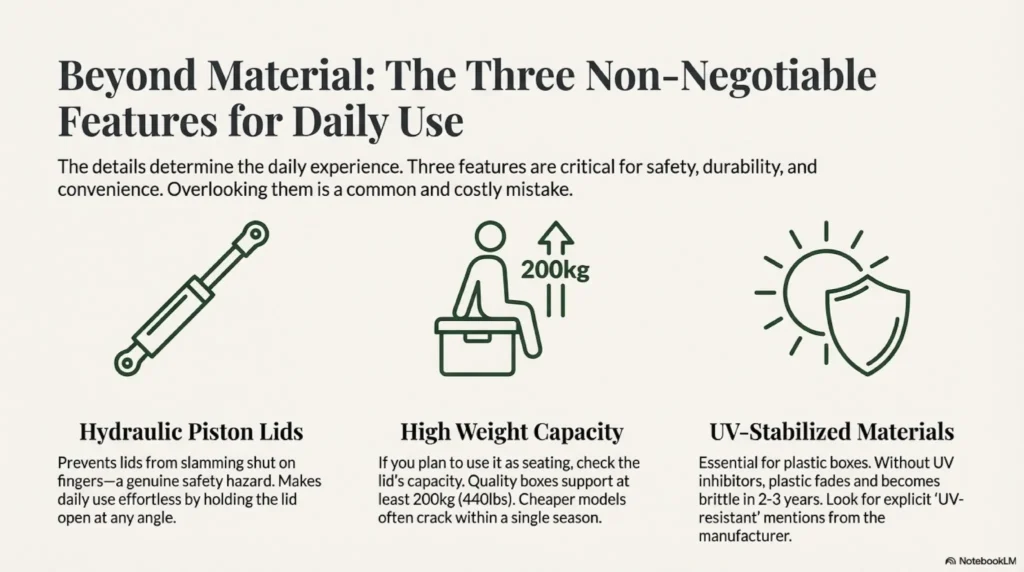
1. Measure Twice, Buy Once
Never browse before measuring. Measure your available space (width, depth, and height clearance). Garden storage boxes often look deceptively compact in online photos but arrive significantly larger than expected.
2. Check Internal Dimensions
External dimensions include lid overhangs, handles, and decorative features. Always verify internal dimensions to ensure your specific cushions, mowers, or equipment actually fit inside.
3. Material Matters: Resin/Plastic for Low Maintenance
Choose Resin or High-Density Polyethylene (HDPE) for weather resistance and virtually zero maintenance. Unlike wood, resin won’t rot, crack, or require annual treatment. Modern resin boxes can last 10-15 years with minimal care.
4. Wood for Natural Aesthetics
Choose Cedar, Teak, or Pressure-Treated Pine if aesthetics are your priority. Wooden boxes blend beautifully into traditional garden designs but require annual sealing or staining to prevent rot and weather damage.
5. Metal for Maximum Security
Choose Galvanized Steel or Powder-Coated Aluminum for ultimate security and rodent resistance. Metal boxes are virtually indestructible and ideal for storing expensive power tools or equipment in high-crime areas.
Critical Features to Look For
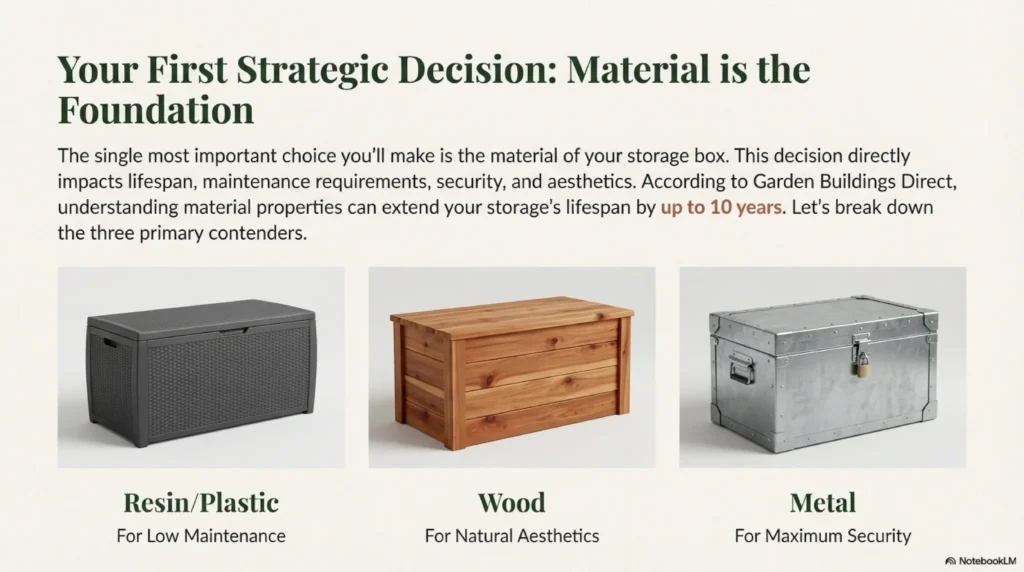
6. Hydraulic Piston Lids Are Non-Negotiable
Look for gas struts or hydraulic pistons that hold the lid open at any angle. This seemingly small feature makes daily use effortless and prevents the lid from slamming shut on fingers—a genuine safety hazard with unsupported lids.
7. Weight Capacity Matters
If you plan to use the box as seating (an everyday dual-purpose use), check the lid’s weight capacity. Quality boxes support at least 200kg (440lbs)—enough for two adults. Cheaper models often crack under seating pressure within a single season.
8. UV Protection Prevents Brittle Plastic
Ensure plastic boxes are UV-stabilized with added UV inhibitors. Without this protection, boxes fade to chalky white and become brittle in 2-3 years of sun exposure. Look for manufacturers that explicitly mention “UV-resistant” or “UV-stabilized” materials.
9. Waterproof vs. Water-Resistant: Know the Difference
“Water-resistant” handles light rain but may allow moisture seepage during storms. “Waterproof” (or IP-rated) boxes keep contents bone-dry even in torrential downpours. For cushions and fabric storage, only truly waterproof boxes will do.
10. Built-In Ventilation Prevents Mold
Quality storage boxes include small ventilation slots near the base or under the rim. These prevent condensation buildup that causes mold, mildew, and that distinctive “damp storage” smell.

11. Lockable Latches for Future Security
Even if you don’t need security now, buy a box with integrated padlock hasps or clasp holes. Adding security later to a box without these features often requires drilling, which can void warranties and compromise waterproofing.
12. Wheels or Rollers for Mobility
Some premium models feature built-in wheels on one end, allowing you to tilt and roll the box like luggage. This is invaluable if you need to move the box for cleaning underneath or seasonal repositioning.
13. Integrated Carrying Handles
Side handles molded into the box design are essential for moving empty boxes without having to drag them. Dragging damages the base and can scratch decking or paving stones.
14. Assembly Time Reality Check
Read verified customer reviews about assembly. “Snap-together” resin boxes often assemble in 10-20 minutes. Metal boxes with bolt-together panels can take 2-4 hours and usually require two people. Factor this time into your decision.
15. Textured Finishes Hide Wear
Wicker-effect or rattan-textured resin hides scratches, scuffs, and dirt accumulation far better than smooth glossy plastic. After 5 years, textured boxes still look respectable while smooth boxes show every mark.
16. Flat Lids vs. Curved: Functional Trade-offs
A flat lid doubles as a potting surface, drinks table, or temporary workspace. A curved or peaked lid sheds rainwater more effectively but can’t support items on top. Choose based on your primary use case.
17. Solid Floor Panel (Not Optional)
Ensure the box includes a solid, elevated floor panel. Some budget metal sheds and boxes are open-bottomed, which exposes contents to ground moisture, insects, and soil contact. This is unacceptable for most storage needs.
18. Color Matching Creates Visual Harmony
Match your storage box color to existing fencing, window frames, or patio furniture for a cohesive garden aesthetic. Neutral colors (anthracite grey, taupe, natural wood tones) blend seamlessly and don’t date as quickly as trendy colors.
19. Parcel Delivery Features
Some modern storage boxes include mail slots or drop chutes, allowing delivery drivers to securely deposit parcels without opening the main lid. This feature has become increasingly popular for homes with frequent deliveries.
20. Manufacturer Warranty Matters
Plastic boxes can crack in extreme cold; hinges can fail. Look for manufacturers offering 2-5 year warranties. Premium brands like Keter, Lifetime, and Suncast often include comprehensive warranties reflecting build quality.
Phase 2: Location & Placement (Tips 21-35)
Placing your storage box correctly extends its lifespan and maximizes functionality. Even the best box will fail prematurely if positioned poorly.
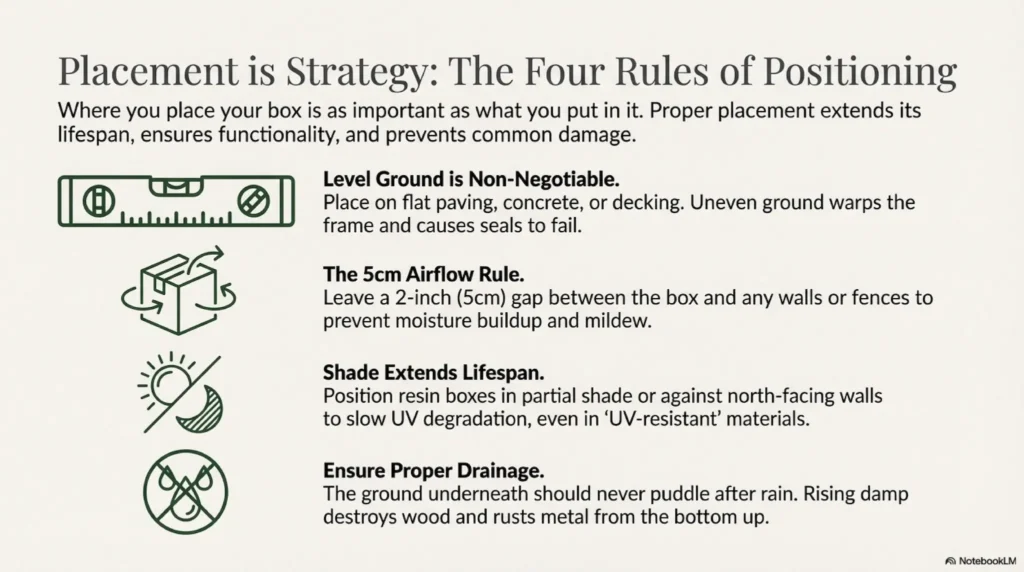
21. Level Ground is Non-Negotiable
Always place boxes on completely flat surfaces—paving, concrete, composite decking, or patio tiles. Uneven ground causes frames to warp, doors to misalign, and seals to fail. Use a spirit level during placement.
22. Allow Airflow Around All Sides
Leave a 2-inch (5cm) gap between the box and walls or fences. This airflow prevents moisture from accumulating on the box exterior, reducing mildew growth and extending the material’s lifespan.
23. Shade Extends Plastic Lifespan Dramatically
If possible, position resin boxes in partial shade or against north-facing walls. Constant direct sunlight accelerates UV degradation even in “UV-resistant” materials.
24. Drainage Prevents Rising Damp
Ensure the ground beneath doesn’t puddle after rain. Rising moisture destroys wooden boxes from the bottom up and causes rust in metal boxes with floor scratches.
25. Accessibility Over Aesthetics
Don’t hide the box in a remote corner just for visual appeal. Place cushion storage near seating areas; garden tool storage near beds and borders. Every extra meter you walk carrying bulky items decreases the system’s usability.
26. Wind Protection in Exposed Areas
In high-wind locations, position boxes against protective walls or anchor them down. Empty lightweight resin boxes can blow over in gale-force winds, damaging the box and nearby plants or furniture.
27. Avoid Placement Under Trees
Tree sap, bird droppings, falling fruit, and leaf debris stain and damage storage boxes. Oak tannins are particularly notorious for causing permanent brown staining on light-colored plastic.
28. Poolside Safety Zones
If storing pool toys or equipment, place the box at least 1 meter (3 feet) from the pool edge to prevent it from becoming a tripping hazard for running children or wet-footed adults.
29. Security Sightlines
Position valuable equipment storage within view of house windows or security camera coverage. Thieves target storage units hidden behind sheds or in blind spots.
30. Gravel Base for Soil Placement
If you must place a box directly on soil, create a 50mm (2-inch) gravel base first. This aids drainage, prevents direct soil contact, and keeps the bottom cleaner during access.
31. Vertical Clearance for Full Lid Opening
Ensure adequate overhead clearance for lids to open fully. Measure lid height when fully open and verify no overhanging eaves, windowsills, or pergola beams obstruct it.
32. Pathway Width Considerations
On narrow garden paths, ensure you can walk past comfortably with the lid fully open. Measure the box’s “footprint” with the lid fully extended before committing to a tight space.
33. Mud Prevention Strategy
Avoid positioning the opening directly onto muddy lawns. Place a decorative stepping stone or paving slab immediately in front of the access point to keep feet clean during use.
34. Integration with Planting
Soften the box’s visual impact by flanking it with potted plants, ornamental grasses, or low hedging. This integration makes the storage feel like an intentional design element rather than an afterthought.
35. Winter Relocation Option
If your box is portable and your area experiences harsh winters, consider moving it to a covered patio, carport, or garage during December-February to maximize its lifespan.
Phase 3: Organization & Packing (Tips 36-60)
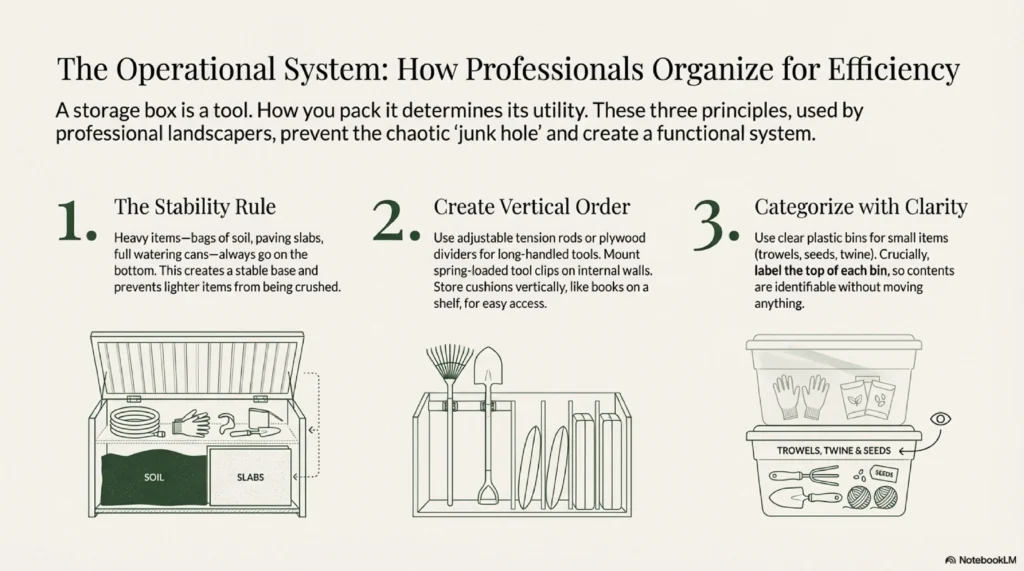
The organization transforms a storage box from a “junk hole” into a functional system. Professional landscapers and garden designers use these techniques.
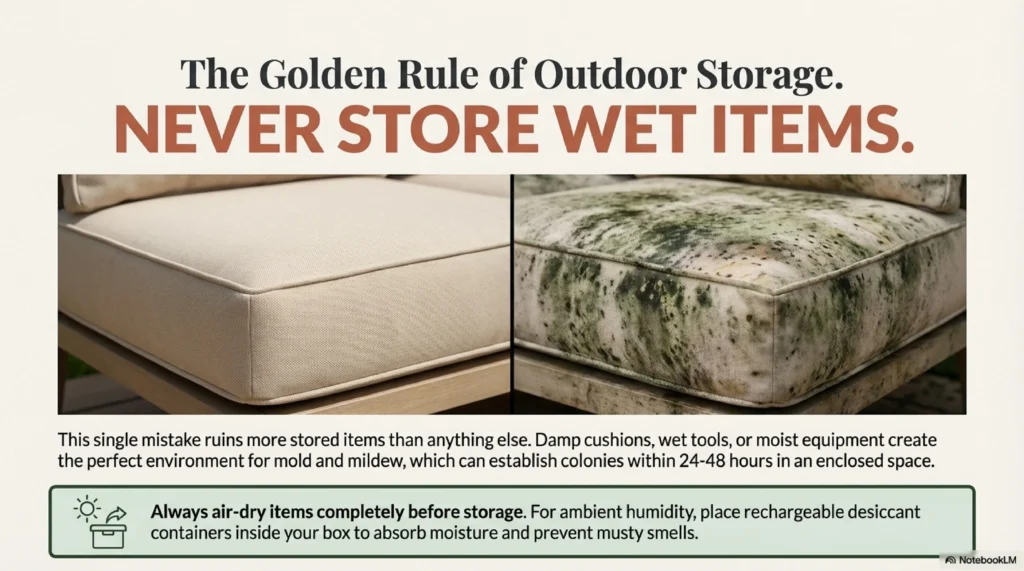
The Golden Rule of Outdoor Storage
36. NEVER Store Wet Items (The #1 Killer)
This single mistake ruins more stored items than anything else. Never put damp cushions, wet tools, or moist equipment into storage. Mold colonies establish within 24-48 hours in enclosed, dark, humid environments. Always air-dry items completely before storage.
37. Desiccant Packs Absorb Ambient Moisture
Place silica gel packets (the kind found in shoe boxes) or rechargeable desiccant containers inside your storage box. These absorb ambient humidity, preventing the musty smell and mildew growth that plagues outdoor storage.
Structural Organization Systems
38. Vertical Dividers for Tall Tools
Use adjustable tension rods (like shower curtain rods) or cut plywood dividers to create vertical sections for long-handled tools—shovels, rakes, brooms. This prevents the chaotic “pile” that makes finding anything impossible.
39. Clear Bins for Small Item Categories
Store small gardening items (trowels, seed packets, plant labels, twine) in clear plastic shoe boxes or storage tubs inside the main box. Clear containers let you identify contents at a glance without opening each one.
40. Label Everything at the Top
Label the top of internal bins with a permanent marker or label maker. When containers are stacked or side-by-side, top labels remain visible without lifting anything out.
41. Heavy Items at Bottom (Stability Rule)
Store heavy items—bags of soil, paving slabs, potted plants, filled watering cans—at the bottom. This creates a stable base and prevents lighter items from being crushed.
42. Frequently Used Items on Top Layer
Keep daily-use items (gardening gloves, hand tools, twine) in the top layer for instant access. Avoid burying everyday items under seasonal equipment.
43. Lid Hook Storage System
Adhere self-adhesive hooks to the underside of the lid to hang lightweight items like gloves, coiled rope, or small hand tools. This utilizes dead space and keeps frequently-used items immediately visible when opening.
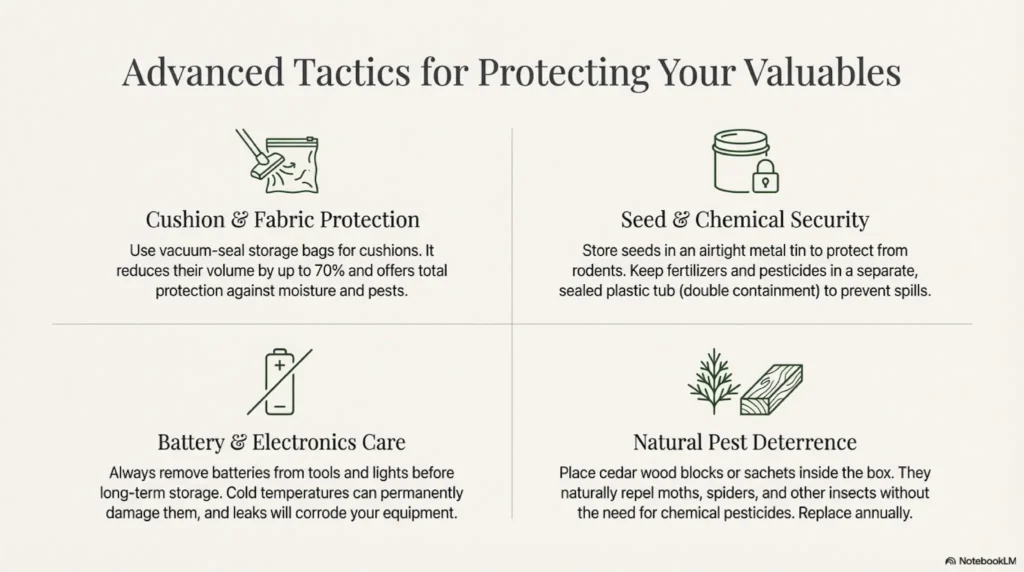
44. Vacuum Seal Bags for Cushions
Use vacuum-seal storage bags for patio cushions during winter. This reduces volume by 70%, protects against moisture, and lets you store a full season’s worth of cushions in half the space.
45. Seed Storage Protection
Never store seed packets loosely in a box—mice will find them. Keep seeds in an airtight metal tin or sealed plastic container within the primary storage to protect from rodents and moisture.
46. Remove Batteries Before Long-Term Storage
Always remove batteries from solar lights, wireless tools, or electronic equipment before winter storage. Cold temperatures permanently damage lithium batteries, and leaking batteries corrode equipment.
47. Chemical Isolation Protocol
Keep fertilizers, pesticides, and weed killers in a separate sealed plastic tub inside the main box. This double containment prevents spills from contaminating other stored items and contains any leaks.
48. Charcoal in Waterproof Containers
Store BBQ charcoal in waterproof plastic dispensers or sealed bags inside the box. Wet charcoal is useless, and the dust from crumbled charcoal creates a permanent mess.
49. Prevent Hose Kinking
Coil garden hoses into large loops, free of kinks, before storage. A kinked hose stored in freezing temperatures will develop permanent cracks at the kink points by spring.
50. Tool Clips for Internal Mounting
Mount spring-loaded broom clips on the internal walls of larger storage boxes. These snap tools securely in place, preventing the rattling jumble that occurs with loose tool storage.
51. Vertical Cushion Storage
Store patio cushions vertically (standing on edge like books on a shelf) rather than stacked flat. This arrangement makes it far easier to pull out a single cushion without disturbing the entire stack.
52. Interior Inventory List
Tape a laminated list of contents to the inside of the lid. This seemingly minor detail prevents the frustrating “I know it’s somewhere in here” search through multiple boxes.
53. Cedar Blocks for Natural Pest Deterrence
Place cedar wood blocks or cedar sachets inside the box to naturally repel moths, spiders, and other insects without chemical pesticides. Replace annually as the cedar scent fades.
54. Toy Net Bag System
Use mesh laundry bags or produce bags for children’s outdoor toys. The mesh allows sand and dirt to shake out, keeps toy sets together, and makes cleanup effortless.
55. Dedicated Sports Equipment Zone
Dedicate one side or section of the box exclusively to sports equipment (balls, rackets, frisbees). This prevents muddy garden tools from soiling sports gear and speeds up family game setup.
56. Nesting Potting Trays
Stack plastic seed trays and potting trays efficiently—they’re designed to nest. Store them on their sides rather than flat to maximize vertical space.
57. Seasonal Rotation Strategy
In November, move summer items (pool toys, sun lounger cushions) to the back and bring winter necessities (snow shovels, ice melt, bird feeders) to the front. Reverse in March. This simple rotation saves countless minutes of digging.
58. Carabiner Bundling System
Use metal carabiners to bundle related items together—pond net attachments on one carabiner, extension cords on another. This prevents the infuriating single-missing-piece scenario.
59. Grab-and-Go Bucket Method
Keep a “daily gardening bucket” inside the primary storage containing your five most-used tools. Grab the entire bucket for quick weeding or deadheading sessions rather than opening the storage box multiple times.
60. Elevate Fabric Items
Never store tablecloths, blankets, or other fabric items directly on the box floor—even in waterproof boxes —because they can develop minor condensation. Please place them in sealed plastic bags on top of a base layer of empty bins or garden canes.
Phase 4: Maintenance & Care (Tips 61-75)
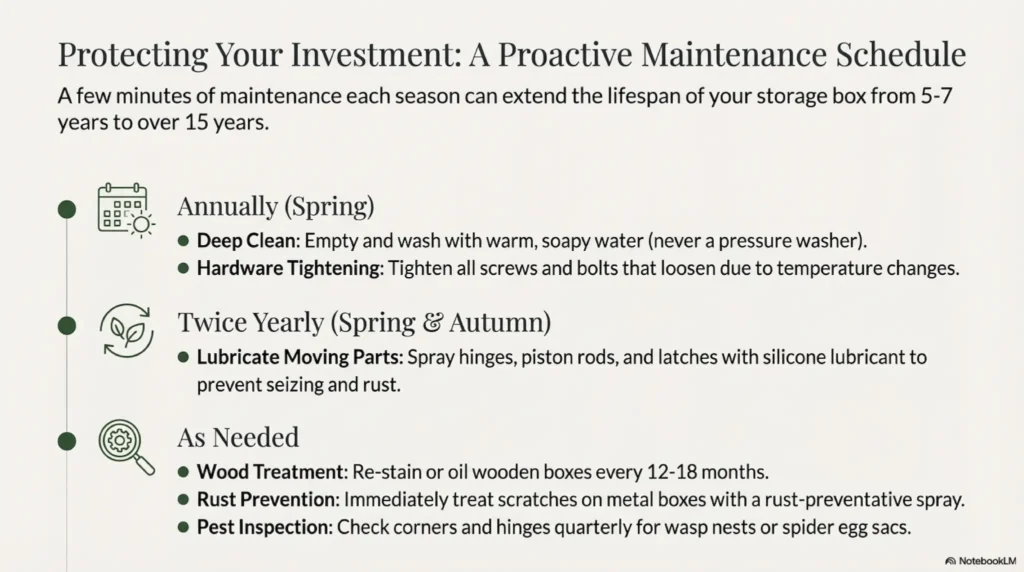
Regular maintenance extends the lifespan of the storage box from 5-7 years to 15+ years. Most maintenance takes under 30 minutes per season.
Cleaning & Seasonal Care
61. Annual Deep Clean in Spring
Once annually (ideally in March or April), empty the box, then wash it with warm, soapy water and a soft sponge. This removes accumulated dirt, prevents staining, and allows you to inspect for damage.
62. Never Use Pressure Washers
High-pressure water strips protective finishes from wood, damages resin texture, and forces water past seals. Use only low-pressure garden hose water or bucket-and-sponge methods.
63. Wood Treatment Schedule
Wooden boxes require re-staining or oiling every 12-18 months. Use outdoor-rated wood stain or teak oil applied with a brush. Untreated wood turns grey and develops rot within 3-4 years.
64. Immediate Rust Prevention
Inspect metal boxes and hinges quarterly for scratches or paint chips exposing bare metal. Apply clear nail polish or a rust-preventative spray (like Rust-Oleum) to damaged areas immediately—rust spreads exponentially once it starts.
65. Lubricate Moving Parts Twice Yearly
Spray hinges, piston rods, and latch mechanisms with WD-40 or silicone lubricant spray in spring and autumn. This prevents seizing and squeaking while protecting against rust.
66. Car Wax Protection
Apply car wax to smooth resin box surfaces once per year. The wax creates a protective barrier that helps rain bead off, reduces UV damage, and makes future cleaning easier.
67. Snow Load Removal
Brush heavy snow off storage lids promptly. Snow weight (especially wet spring snow) can exceed design limits, permanently warping plastic lids or cracking panel joints.
68. Hardware Tightening Schedule
Temperature cycling causes screws and bolts to loosen. Tighten all visible hardware at the start of each season with the appropriate screwdriver or Allen key.
69. Immediate Bird Dropping Removal
Bird droppings are highly acidic and can permanently etch both plastic and wood. Clean them off within 24-48 hours using a diluted vinegar solution (1:3 vinegar to water).
70. Mildew Deep Treatment
If you detect a mildew smell, empty the box and wash interior surfaces with white vinegar solution (1:1 vinegar to water). Leave the lid open in direct sunlight for a full day—UV light naturally kills mold spores.
71. Quarterly Pest Inspection
Check inside corners, under rim lips, and hinge areas for wasp nests, spider egg sacs, or ant trails every 3 months. Early detection prevents major infestations requiring professional pest control.
72. Verify Ventilation Hole Clarity
Ensure leaves, spider webs, or wasp nests don’t block built-in ventilation holes. Blocked ventilation dramatically increases the risk of internal condensation and mold.
73. Floor Liner Protection
If storing heavy, sharp tools (post-hole diggers, digging bars), place a sheet of plywood or rubber matting on the floor to prevent punctures or scratches that compromise waterproofing.
74. Plastic Restorer for Faded Resin
Revive faded plastic boxes using automotive plastic restorer products (like Mothers Back-to-Black) or carefully applied heat gun treatment (advanced technique—test on an inconspicuous area first).
75. Lock Mechanism Maintenance
Put a small drop of graphite powder or lock lubricant inside padlock keyholes every autumn. This prevents locks from freezing or seizing during winter, avoiding the frustration of inaccessible storage in emergencies.
Phase 5: Security & Safety (Tips 76-85)
Garden theft is on the rise—power tools and outdoor equipment are prime targets. Security measures deter opportunistic thieves.
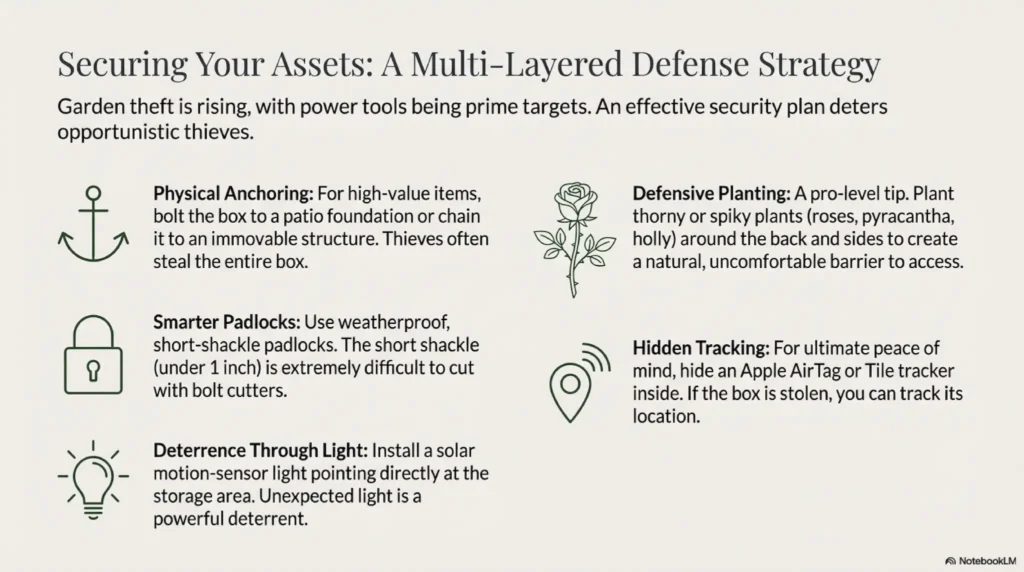
76. Physical Anchoring Systems
Bolt the storage box to patio foundations or chain it to immovable structures (fence posts, building walls) if storing valuable equipment. Thieves steal entire unsecured boxes.
77. Motion-Activated Lighting
Install solar motion-sensor lights pointing directly at the storage area. Most garden thefts occur in the dark; motion lights create the illusion of active monitoring.
78. Premium Padlock Selection
Use weatherproof, short-shackle padlocks (shackle height under 1 inch/25mm). Short shackles are extremely difficult to cut with bolt cutters. Brands like Abus and Master Lock make weather-resistant models.
79. Internal Hinge Security
Ensure hinges are mounted on the inside of the box or use security screws with one-way heads. External hinges can be unscrewed in seconds, rendering locks worthless.
80. Hidden Tracker Installation
Hide an Apple AirTag, Tile tracker, or similar Bluetooth tracker under the box lining or taped to the interior floor. If the entire box is stolen, you can track its location and alert the police.
81. Obscurity Beats Advertising
Never leave the box open displaying expensive power tools or equipment when not actively in use. Visual discretion reduces theft temptation significantly.
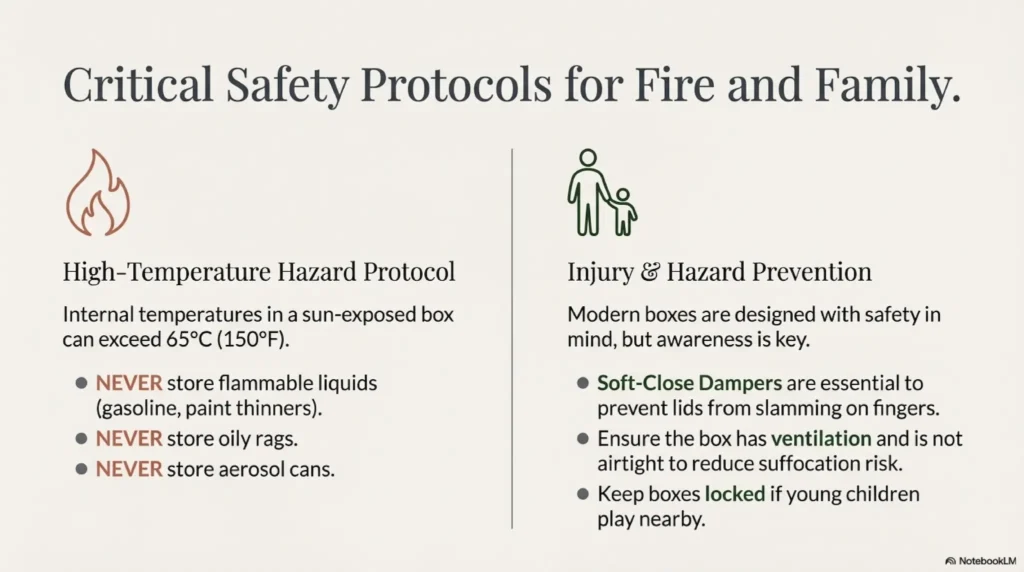
82. Fire Safety Protocol
Never store oily rags, gasoline, paint thinners, or aerosol cans in boxes that receive direct afternoon sunlight. Internal temperatures can exceed 65°C (150°F), creating serious fire or explosion risks.
83. Child Safety Considerations
Ensure boxes are not airtight (to reduce suffocation risk if a child climbs inside and the lid closes). Modern boxes include ventilation specifically for this safety reason. If young children play nearby, use boxes with lockable lids.
84. Soft-Close Dampers for Family Safety
If you have children or elderly family members, soft-close lid dampers are essential safety features. Standard unsupported lids can slam shut with surprising force, causing serious finger injuries.
85. Defensive Planting Strategy
Plant thorny or spiky plants (roses, pyracantha, holly, berberis) around the back and sides of storage boxes. This creates a natural barrier that makes unauthorized access highly uncomfortable for thieves.
Phase 6: Creative & Alternative Uses (Tips 86-100)
Storage boxes aren’t just for cushions and tools. These creative applications maximize your investment.
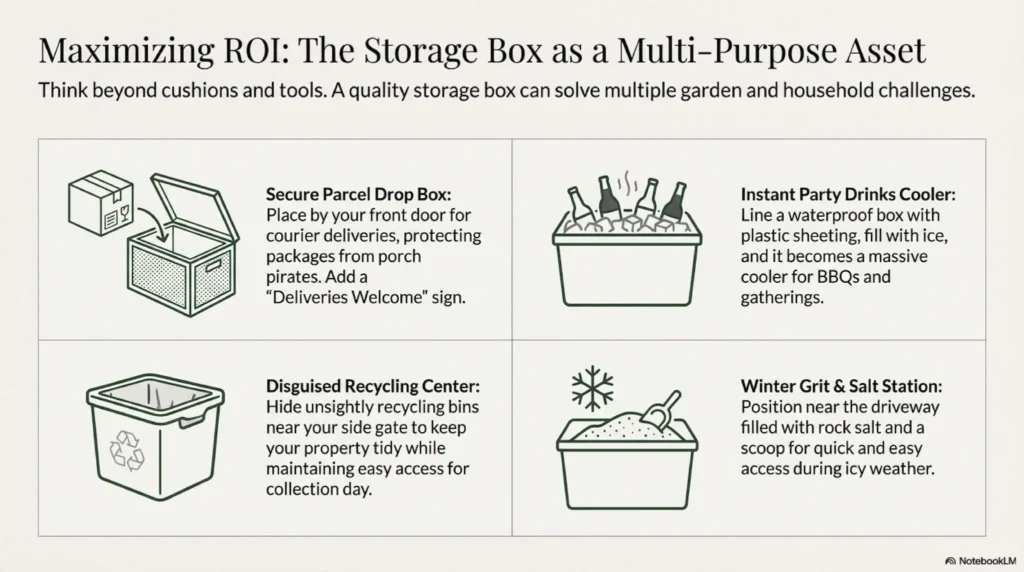
86. Secure Parcel Drop Box
Place a sign reading “Deliveries Welcome” on an unlocked box for daytime courier deliveries. Lock it remotely or when arriving home to secure parcels from porch pirates.
87. Firewood Dry Storage
Excellent for keeping winter firewood dry and accessible. Ensure the box has good ventilation to prevent mold on wood. A 150L box holds approximately 2-3 days’ firewood for an average wood burner.
88. Disguised Recycling Center
Hide unsightly recycling bins or collection bags inside a decorative storage box near your side gate. This keeps streets tidy while maintaining easy access on collection day.
89. Winter Salt and Grit Station
Position a storage box near the driveway filled with rock salt and grit sand. Add a scoop inside for quick ice-emergency response without trudging to a garage or shed.
90. Mudroom Boot Repository
Place a box by the back door for muddy wellies, football boots, and garden clogs. This creates a “dirty shoe quarantine zone” that prevents mud tracking through the house.
91. Party Drinks Cooler
Line a waterproof box with plastic sheeting, fill with ice, and submerge bottles and cans for BBQ parties. A 150L box serves as a massive cooler for 30-40 guests.
92. Pool Equipment Concealment
Cut ventilation holes in the back panel for electrical wires and water hoses, then place the box over ugly pool pumps and filtration systems. This dramatically improves poolside aesthetics.
93. Compost Bin Conversion
Drill multiple 10mm holes in the bottom and lower sides of a retired storage box to convert it into a functional compost bin. The waterproof lid traps odors, while ventilation promotes aerobic decomposition.
94. Animal Feed Storage
Ideal for storing bags of chicken feed, wild bird seed, or dog food. Choose metal boxes to prevent rodent access—rodents will chew through plastic boxes.
95. Balcony Space-Saving Furniture
On apartment balconies, a storage box with a cushion serves as both seating and storage—the ultimate space-saving dual-purpose furniture for compact outdoor areas.
96. Generator Acoustic Enclosure
With additional ventilation modifications and exhaust ports, storage boxes significantly reduce the noise from portable generators. Essential for camping, generators, or home backup power systems.
97. Children’s Ride-On Toy Garage
Long, low boxes (like deck boxes) are the perfect size for storing children’s scooters, skateboards, balance bikes, and ride-on toys, keeping them dry and protected from rust.
98. Outdoor Bar Station
Store spirits, mixers, glassware, and bar accessories inside; the flat lid becomes the mixing surface. Add battery-powered LED strip lights under the rim for evening ambiance.
99. Emergency Preparedness Kit
Store flood sandbags, emergency torches, first aid kits, and thermal blankets in a waterproof storage box. Having emergency supplies organized and accessible can be critical during natural disasters.
100. Hidden Garden Office
For larger “shed-style” storage boxes, install a fold-down shelf on one interior wall to create a temporary outdoor laptop workstation. Add a cushion on the lid for seating and enjoy al fresco working.
Material Comparison at a Glance
| Feature | Resin/Plastic | Wood (Cedar/Teak) | Metal (Steel/Aluminum) |
| Lifespan | 10-15 years | 15-25 years (with maintenance) | 20-30 years |
| Maintenance | ⭐⭐⭐⭐⭐ Minimal | ⭐⭐ High | ⭐⭐⭐ Moderate |
| Weather Resistance | ⭐⭐⭐⭐⭐ Excellent | ⭐⭐⭐ Good | ⭐⭐⭐⭐ Very Good |
| Security | ⭐⭐⭐ Moderate | ⭐⭐ Low | ⭐⭐⭐⭐⭐ Excellent |
| Cost | £80-£250 | £150-£600 | £200-£800 |
| Weight | Lightweight | Medium | Heavy |
| Aesthetics | ⭐⭐⭐ Good | ⭐⭐⭐⭐⭐ Excellent | ⭐⭐⭐⭐ Very Good |
| UV Resistance | ⭐⭐⭐⭐ Good | ⭐⭐ Requires treatment | ⭐⭐⭐⭐⭐ Excellent |
| Assembly | ⭐⭐⭐⭐⭐ Easy (15-30 min) | ⭐⭐⭐ Moderate | ⭐⭐ Difficult (60-240 min) |
Best for beginners: Resin/Plastic | Best for aesthetics: Wood | Best for security: Metal
Frequently Asked Questions
Q: How long do garden storage boxes typically last?
A: Lifespan varies dramatically by material. High-quality resin boxes last 10-15 years with minimal maintenance. Wooden boxes (cedar or teak) can last 20-25 years with annual treatment. Metal boxes often exceed 20-30 years. Budget plastic boxes may only last 3-5 years before cracking or fading.
Q: What should I never store in an outdoor storage box?
A: Never store essential documents, electronics (without waterproof protection), fresh food, propane tanks, oily rags in hot locations, or fabric furniture without sealed protection. Also, avoid storing power tool batteries in freezing temperatures—they permanently lose capacity.
Q: Are resin storage boxes really waterproof?
A: Most quality resin boxes are water-resistant rather than 100% waterproof. They handle rain excellently but may allow minor moisture seepage during sustained storms. For valuable items or fabric cushions, look for boxes specifically rated “waterproof” or with an IP rating (IP54 or higher).
Q: Can I sit on my garden storage box?
A: Only if the manufacturer specifies a weight rating for the lid. Quality boxes support 200-300kg (440-660lbs), but budget models may crack under adult weight. Always verify the weight capacity specification before using it for seating.
Q: How do I prevent mold in my storage box?
A: The keys are: (1) Never store wet items, (2) Use desiccant packs or moisture absorbers, (3) Ensure the box has ventilation, (4) Open the lid monthly for air circulation, and (5) Clean annually with a vinegar solution.
Q: What’s the best material for extreme weather?
A: For extreme heat and UV exposure: Metal or UV-stabilized resin. For extreme cold and snow: Metal (with rust protection) or pressure-treated wood. For coastal salt spray: aluminum- or marine-grade-treated timber. For all-around durability: Metal wins.
Final Thoughts: Transform Your Outdoor Space Today
A well-chosen and properly maintained garden storage box transforms outdoor chaos into organized efficiency. By implementing even a fraction of these 100 tips, you’ll extend the lifespan of your storage, protect valuable equipment, and create a tidier, more functional outdoor space.
Your Action Plan:
- Week 1: Assess your storage needs and choose the right material
- Week 2: Select the perfect location using the placement guidelines
- Week 3: Implement the organizational systems that suit your equipment
- Ongoing: Follow the seasonal maintenance schedule.
Remember: The cheapest box is rarely the best value. Investing £50-£100 more upfront in quality construction, weatherproofing, and proper features prevents the need to replace failed storage boxes every 3-4 years.
Have a clever storage tip we missed? Found an innovative use for your garden box? Share your experience in the comments below!